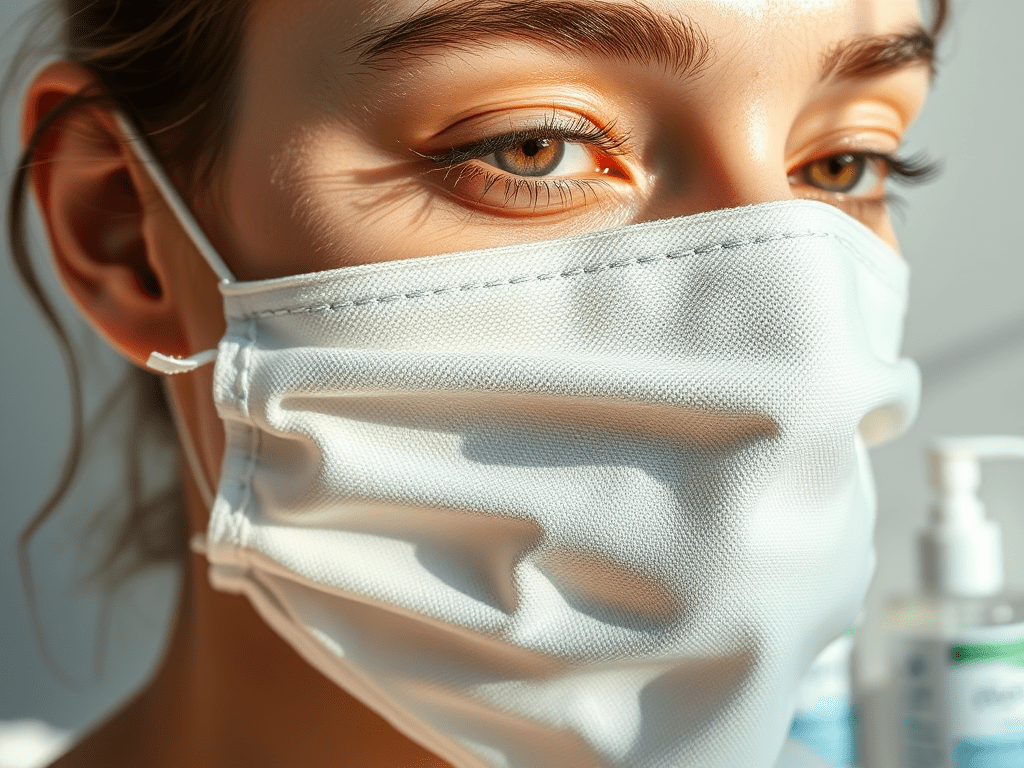
If your skin has been acting up since you started wearing a face mask regularly—especially around your chin, mouth, cheeks, and jawline—you’re not imagining things. The breakout pattern is so common it has its own nickname: maskne.
Short for “mask acne,” maskne refers to acne and irritation that appear in areas covered by a mask. It spiked in prevalence during the pandemic and continues to affect healthcare workers, students, and anyone who wears a face covering for hours a day.
But what actually causes maskne—and how do you stop it without ditching your mask altogether?
Let’s break it down.
What Causes Maskne?
Maskne is primarily a form of acne mechanica—a type of acne caused by friction, pressure, and heat. But the story is a bit more complex:
- Friction and pressure from the mask fabric irritate the skin, weakening the skin barrier and leading to inflammation.
- Trapped humidity from your breath and sweat creates a warm, moist environment where bacteria and yeast thrive.
- Pore-clogging buildup from sebum, makeup, or skincare under the mask gets pressed into the skin.
- Occlusion prevents proper airflow, which can aggravate existing acne or trigger new breakouts.
Together, these factors lead to clogged pores, irritation, and breakouts right where your mask rests—especially around the mouth, chin, and lower cheeks.
How to Tell If It’s Maskne
Maskne isn’t always just pimples. You might also notice:
- Small whiteheads or blackheads
- Red, inflamed papules or pustules
- Fungal acne (tiny uniform bumps)
- Irritated, raw, or peeling skin
- Rosacea flares or contact dermatitis (especially if you’re sensitive to certain mask fabrics)
Maskne typically forms in the “beard” zone—where your mask sits. It’s often symmetrical and worse after long mask-wearing days.
How to Prevent and Treat Maskne
Maskne can be frustrating, but the good news is: with a few targeted changes, it’s absolutely treatable—and preventable.
1. Choose the Right Mask
- Go for breathable, soft fabrics like cotton. Avoid synthetic fabrics that trap heat or cause friction.
- Make sure your mask fits snugly but not too tight.
- Wash reusable masks daily with a fragrance-free detergent.
2. Simplify Your Skincare Routine
- Use a gentle, non-foaming cleanser before and after wearing a mask.
- Apply a lightweight, non-comedogenic moisturizer to strengthen the skin barrier.
- Avoid heavy makeup under the mask—it clogs pores and adds to the occlusion.
- In the evening, incorporate salicylic acid, benzoyl peroxide, or retinoids to help unclog pores and reduce inflammation.
Pro tip: Use a thin layer of a bland barrier ointment (like Aquaphor or CeraVe Healing Ointment) on high-friction areas to reduce irritation and prevent chafing.
3. Treat the Breakouts
- For mild breakouts, try over-the-counter products with:
- 2% salicylic acid (BHA)
- 5% benzoyl peroxide (apply only where needed)
- Niacinamide (calms redness and supports barrier repair)
- For more stubborn acne, a dermatologist may prescribe:
- Topical antibiotics
- Retinoids
- Oral medications (for severe or cystic breakouts)
When to See a Dermatologist
If your skin isn’t improving after 4–6 weeks of consistent care—or if you’re developing itchy rashes, peeling, or deep cysts—it’s time to get professional guidance. You may be dealing with perioral dermatitis, contact dermatitis, or even yeast overgrowth (Malassezia folliculitis), which require different treatments than traditional acne.
Quick Tips for Maskne Prevention
- Avoid wearing the same mask multiple days without washing it.
- Carry an extra mask to swap out mid-day if yours gets damp.
- Take “mask breaks” outdoors when safe to let your skin breathe.
- Stay consistent—most treatments take at least a few weeks to show real results.
Maskne Is Real—But It’s Treatable
If you’ve been breaking out from your mask, don’t beat yourself up. Maskne is a common medical skin issue, not a sign of poor hygiene. With the right routine and support, you can restore your skin—even while staying safe.
mask acne, maskne, breakouts from mask, acne mechanica, face mask acne, how to treat maskne, mask-related acne
#maskne #maskacne #pandemicskin #skincareproblems #acnehelp


Leave a comment