
Will medications like Ozempic and Wegovy be effective options for this chronic inflammatory skin condition?
Introduction
Hidradenitis suppurativa (HS) is a chronic inflammatory skin disease with a complex pathogenesis, often associated with metabolic abnormalities like obesity and diabetes. Glucagon-like peptide-1 receptor agonists (GLP-1 RAs) are drugs primarily used to manage type 2 diabetes and obesity. Think Ozempic, Wegovy, or Moujoro. Recent research suggests that GLP-1 RAs may also have therapeutic benefits for HS due to their anti-inflammatory effects and ability to promote weight loss.
GLP-1 RAs and Their Mechanisms of Action
GLP-1 RAs are synthetic peptides that mimic the activity of the natural hormone GLP-1. They work by binding to GLP-1 receptors on various cells in the body, including pancreatic cells, immune cells, and cells in the brain and gut. This binding leads to several effects:
- Increased insulin secretion: GLP-1 RAs stimulate the release of insulin from pancreatic cells, helping to regulate blood sugar levels.
- Reduced glucagon secretion: GLP-1 RAs suppress the release of glucagon, another hormone involved in blood sugar control.
- Slowed gastric emptying: GLP-1 RAs delay the rate at which food empties from the stomach, leading to increased feelings of fullness and reduced appetite.
- Anti-inflammatory effects: GLP-1 RAs modulate immune responses and reduce the production of inflammatory cytokines.

Krajewski, P. K., Złotowska, A., & Szepietowski, J. C. (2024). The Therapeutic Potential of GLP-1 Receptor Agonists in the Management of Hidradenitis Suppurativa: A Systematic Review of Anti-Inflammatory and Metabolic Effects. Journal of Clinical Medicine, 13(21), 6292. https://doi.org/10.3390/jcm13216292
Evidence for GLP-1 RAs in HS
Several studies have investigated the use of GLP-1 RAs in HS, with promising results:
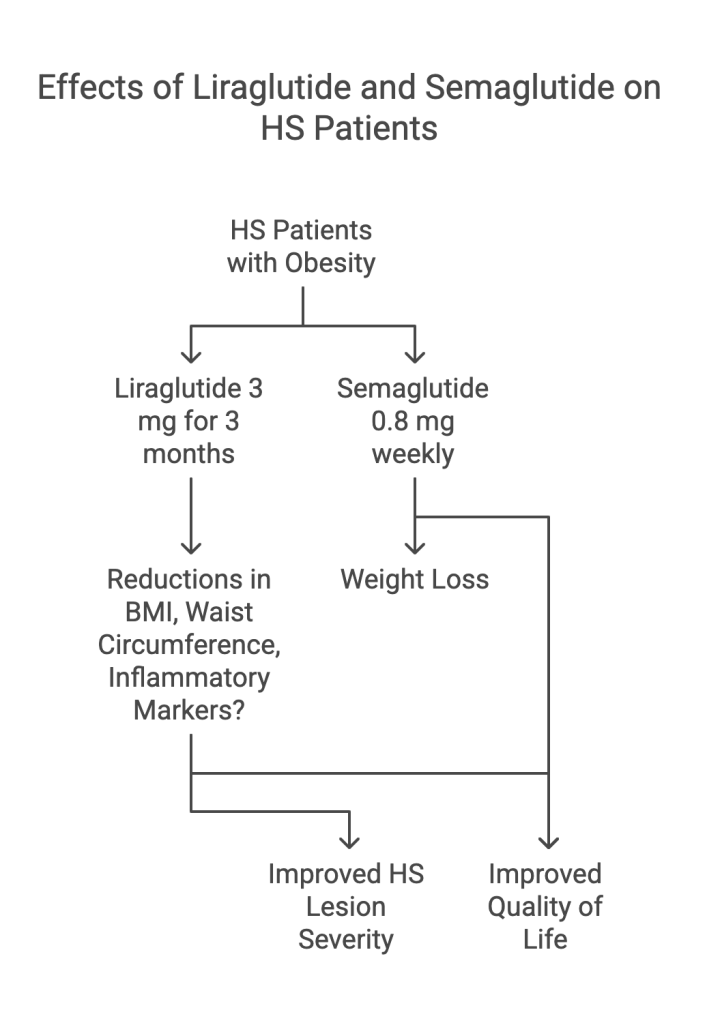
- Liraglutide: A study by Nicolau et al. (2024) found that liraglutide at a dose of 3 mg for 3 months significantly reduced BMI, waist circumference, and inflammatory markers in HS patients with obesity. The study also reported improvements in HS lesion severity and quality of life.
- Semaglutide: A retrospective analysis by Lyons et al. (2024) showed that semaglutide, at an average weekly dose of 0.8 mg, led to significant weight loss and improved quality of life in HS patients with obesity.
Potential Benefits and Future Directions
GLP-1 RAs offer a potential new approach to HS management, addressing both the metabolic and inflammatory aspects of the disease. Their ability to promote weight loss and reduce systemic inflammation may help improve HS symptoms and quality of life.
While the current evidence is promising, more research is needed to fully establish the efficacy and safety of GLP-1 RAs in HS. Future studies should explore optimal dosing regimens, long-term effects, and the potential for combination therapy with other HS treatments.
Conclusion
GLP-1 RAs represent an exciting area of research in HS management. Their dual action on metabolism and inflammation makes them a potential game-changer for this challenging condition. As evidence continues to accumulate, GLP-1 RAs may become an important part of the therapeutic landscape for HS.
Dive deeper into the cite review at DOI: 10.3390/jcm13216292


Leave a comment