
Wang FY, Chi CC. Rosacea, Germs, and Bowels: A Review on Gastrointestinal Comorbidities and Gut-Skin Axis of Rosacea. Adv Ther. 2021 Mar;38(3):1415-1424. doi: 10.1007/s12325-021-01624-x. Epub 2021 Jan 28. PMID: 33507499; PMCID: PMC7932979.
Rosacea, a chronic inflammatory skin condition that causes facial redness, flushing, and bumps, is often more than just a skin issue. Recent research has highlighted a fascinating connection between rosacea and various gastrointestinal (GI) problems, suggesting a complex interplay between skin health and gut health.
The Gut-Skin Axis: A Two-Way Street
The gut-skin axis is a term used to describe the intricate relationship between the gut microbiome (the community of microorganisms living in our gut) and skin health. These two seemingly distant systems are connected through a complex network of immune, metabolic, and nervous system interactions.
In essence, what happens in the gut can affect the skin, and vice versa. Imbalances in the gut microbiome, known as dysbiosis, can disrupt immune function and increase inflammation throughout the body, potentially contributing to skin conditions like rosacea.
Rosacea and Specific GI Conditions
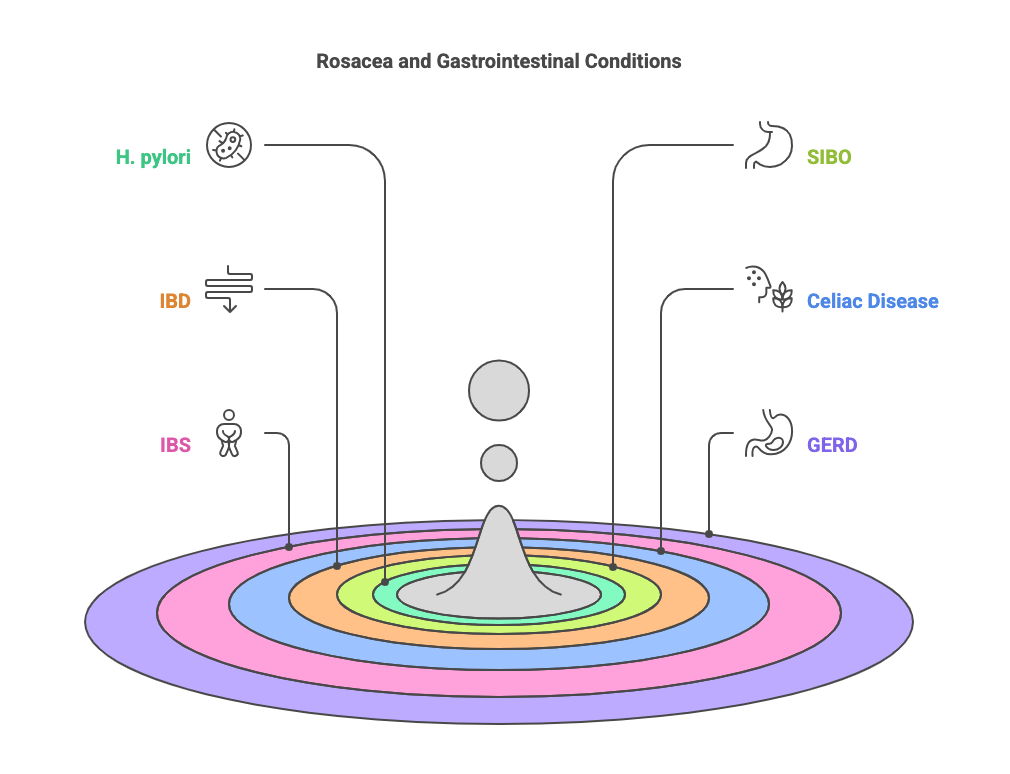
Here’s a closer look at the associations between rosacea and various GI pathologies:
- Helicobacter pylori Infection: Helicobacter pylori (H. pylori) is a bacterium that can infect the stomach, causing gastritis and ulcers. Studies have shown a higher prevalence of H. pylori infection in people with rosacea, particularly those with moderate to severe rosacea. Interestingly, some reports suggest that eradicating H. pylori with antibiotics can improve rosacea symptoms, although more research is needed to confirm this link.
- Small Intestinal Bacterial Overgrowth (SIBO): SIBO is a condition where there is an excessive number of bacteria in the small intestine. Studies have shown a significantly higher prevalence of SIBO in people with rosacea, especially those with the papulopustular type (characterized by bumps and pustules). Eradicating SIBO with antibiotics like rifaximin has been shown to improve rosacea symptoms significantly, with some studies showing long-lasting effects.
- Inflammatory Bowel Disease (IBD): IBD, which includes Crohn’s disease and ulcerative colitis, is a chronic inflammatory condition affecting the digestive tract. Research has consistently shown a strong association between rosacea and IBD, with the link appearing stronger for Crohn’s disease. This association may be due to shared genetic factors, immune system dysregulation, and gut microbiome imbalances.
- Celiac Disease: Celiac disease is an autoimmune disorder triggered by gluten consumption, causing damage to the small intestine. Studies have found a significant association between rosacea and celiac disease, particularly in women. Shared genetic risk factors and the presence of SIBO in both conditions may contribute to this link.
- Irritable Bowel Syndrome (IBS): IBS is a common functional disorder affecting the digestive system, causing symptoms like abdominal pain, bloating, and changes in bowel habits. Research suggests an increased risk of IBS in people with rosacea, particularly women. Shared mechanisms, such as increased TNF production and the presence of SIBO, may contribute to this association.
- Gastroesophageal Reflux Disease (GERD): GERD is a condition where stomach acid flows back up into the esophagus, causing heartburn and other symptoms. One study reported a significant association between rosacea and GERD, although more research is needed to confirm this link.
Implications and Future Directions
The associations between rosacea and these various GI conditions suggest that a holistic approach to managing rosacea may be necessary. Addressing gut health through dietary modifications, probiotics, or other interventions may not only improve GI symptoms but also potentially benefit rosacea.
More research is needed to fully understand the complex interplay between rosacea and gut health. However, the current evidence highlights the importance of considering gut health in the management of rosacea and encourages further exploration of targeted therapies aimed at modulating the gut-skin axis.
 Zehn Skin and Health
Leave a comment