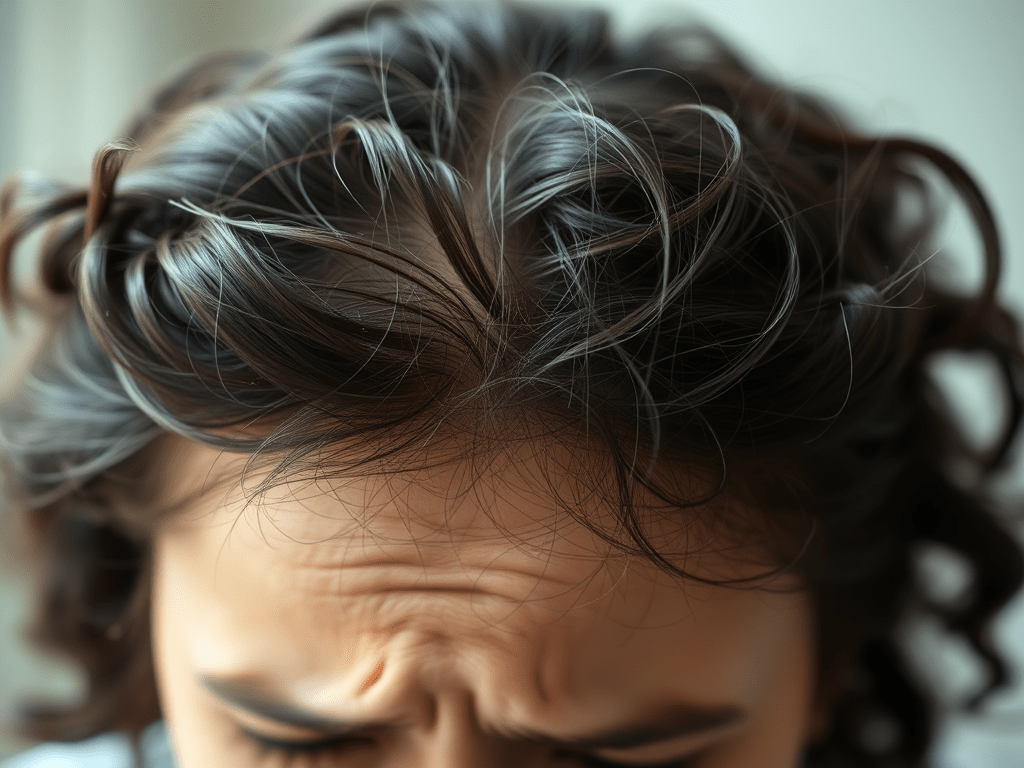
Telogen effluvium (TE) is a common form of nonscarring alopecia, a condition characterized by hair loss that doesn’t involve scarring of the scalp1. TE typically involves an abrupt onset of hair shedding, usually several months after experiencing a triggering event2. It usually lasts around 6 months, except for cases of chronic telogen effluvium, which lasts longer than 6 months2. This condition arises from the premature transition of hair follicles into the telogen (resting) phase, leading to increased hair shedding4. While generally temporary, TE can cause significant distress and concern for those experiencing it. This review will delve into the causes, workup, and treatment of TE, incorporating recent studies and clinical trials.
The Hair Cycle and Telogen Effluvium
To understand TE, it’s crucial to grasp the normal hair growth cycle. This cycle comprises three main phases:
- Anagen: The active growth phase, where hair follicles produce new hair fibers. This phase typically lasts for years1.
- Catagen: A transitional phase marked by the cessation of hair growth and the regression of the hair follicle. This phase lasts for a few weeks1.
- Telogen: The resting phase, where the hair follicle remains dormant for several months before shedding the hair shaft.
In a healthy scalp, approximately 85% of hair follicles are in the anagen phase, while 15% are in the telogen phase1. TE disrupts this balance, causing a larger proportion of hair follicles to enter the telogen phase prematurely. This results in increased hair shedding, often noticeable 2 to 4 months after a triggering event5. Evidence suggests that the mechanism by which a telogen hair is shed may be an active process that can occur independently of the emerging anagen hair6.
Causes of Telogen Effluvium
TE is a reactive process triggered by various factors. Some of the most common triggers include stress, hormonal changes (such as those that occur after childbirth or with thyroid dysfunction), and certain medications1. These factors can be categorized as follows:
Physiological Stressors:
- Acute febrile illness 1
- Severe infection 1
- Major surgery 1
- Severe trauma 1
- Childbirth 7
Hormonal Changes:
- Postpartum hormonal changes, particularly a decrease in estrogen 1
- Hypothyroidism 1
- Hyperthyroidism 7
- Discontinuing estrogen-containing medication, including birth control pills 1
Medications:
- Beta-blockers 1
- Retinoids, including excess vitamin A 1
- Anticoagulants 1
- Propylthiouracil 1
- Carbamazepine 1
Nutritional Deficiencies:
- Crash dieting 1
- Low protein intake 1
- Iron deficiency 1
- Severe protein, fatty acid, and zinc deficiency 9
- Chronic starvation and caloric restriction 9
- Essential fatty acid deficiency 9
- Vitamin D deficiency 9
- Biotin deficiency (rarely) 9
Other Factors:
- Psychological stress 7 Evidence from murine studies has indicated that psychological stress can induce catagen (the transition phase from anagen to telogen), mainly by exerting effects on neurotransmitters and hormones6.
- Marked weight loss and extreme dieting 3
- Severe skin problem affecting the scalp 3
- New medication or withdrawal of hormone treatment 3
It’s important to note that in approximately one-third of individuals diagnosed with TE, no specific cause is identified3.
Workup and Diagnosis of Telogen Effluvium
Diagnosing TE typically involves a detailed patient history, a thorough physical examination of the scalp, and sometimes additional tests1.
Patient History:
The healthcare provider will inquire about the patient’s medical history, including recent illnesses, surgeries, medications, dietary habits, and stressful life events8. This information helps identify potential triggers for TE.
Physical Examination:
A physical examination of the scalp is crucial to assess the pattern and extent of hair loss. The provider may perform a “pull test” by gently pulling a small clump of hair8.
Additional Tests:
- Scalp Biopsy: This is the most definitive test for confirming TE, but it’s rarely necessary if the history is characteristic and a gentle hair pull produces numerous telogen hairs1. A biopsy can reveal an increased percentage of telogen hairs in the shedding phase1.
- Blood Tests: Blood tests may be conducted to rule out underlying conditions that can contribute to hair loss, such as hypothyroidism, iron deficiency anemia, and other metabolic or nutritional deficiencies3.
- Trichogram: This involves examining hair shafts under a microscope to assess their morphology (shape and structure) and identify abnormalities11.
- Phototrichogram: This non-invasive technique uses a camera and computer software to analyze hair density and growth patterns.
- Trichoscopy: This is a non-invasive procedure performed in dermatology clinics using a handheld device with a magnifying lens and a light source. It is a helpful tool in determining the correct diagnosis of hair loss presentations and allows for monitoring of response during treatment12.
Treatment of Telogen Effluvium
In most cases, TE is self-limiting and resolves within 6 to 9 months once the underlying trigger is corrected11. However, treatment options may be considered to support hair regrowth and manage the condition.
Addressing Underlying Causes:
The primary approach to treating TE is to identify and manage the underlying cause. This may involve:
- Treating any underlying medical conditions.
- Adjusting medications that may be contributing to hair loss.
- Improving nutritional status through dietary changes or supplements.
- Managing stress through relaxation techniques, exercise, or therapy.
Medical Treatments:
The choice of treatment for TE depends on several factors, including the severity of hair loss, the underlying cause, and patient preferences13. Options include:
- Minoxidil (Rogaine®): This over-the-counter topical medication is often used to promote hair growth8. While its effectiveness in TE is not definitively proven, it may be beneficial for some individuals14.
- Corticosteroids: In some cases, topical or oral corticosteroids may be prescribed to reduce inflammation and promote hair regrowth if the TE is associated with an underlying inflammatory or autoimmune pathology9.
- Topical Regenerative Preparations: Recent studies have explored the use of topical preparations that mimic autologous platelet-rich plasma (PRP) to improve hair loss in TE and androgenetic alopecia (AGA)13.
Supportive Measures:
- Gentle Hair Care: Avoid harsh hair treatments, such as tight hairstyles, excessive heat styling, and harsh chemicals.
- Scalp Massage: Gentle scalp massage may help improve blood circulation to the hair follicles.
- Balanced Diet: Ensure a balanced diet with adequate protein, fruits, and vegetables to support hair health15.
- Vitamins and Minerals: Certain vitamins and minerals, such as vitamins A, B, C, D, E, zinc, biotin, and iron, are essential for healthy hair growth8. Consult a healthcare provider before taking any new supplements.
Recent Studies and Clinical Trials
COVID-19-Related Telogen Effluvium:
Recent research has shed light on the potential link between COVID-19 infection and TE. Studies have reported increased rates of TE among individuals recovering from COVID-196. This association is likely due to the physiological stress and immune response triggered by the infection17. One study found that 22.6% of COVID-19 patients experienced hair loss, with the majority of cases occurring 2 to 3 months after infection17. Another study highlighted that TE after COVID-19 infection is reversible with appropriate dermatological treatment16. It’s essential for healthcare providers to consider COVID-19 as a potential trigger for TE in patients presenting with hair loss, especially during the post-COVID-19 pandemic period16.
Other Clinical Trials:
Clinical trials have investigated various treatment modalities for TE, including:
- Botulinum Toxin A: A randomized clinical trial found that a single session of Botulinum toxin A injection was effective in the treatment of TE. This was reflected in the improvement of hair parameters, such as terminal hair count and the number of multiple follicular units18.
- Multivitamins Mesotherapy: The same randomized clinical trial showed that multiple sessions of multivitamins mesotherapy injection were also beneficial in treating TE18.
Of note, there was no control group in this study, as such it is unclear if these patients would have gotten better regardless if they received treatment or not. As such, the results of this study should be taken with a grain of salt.
- Low-Level Laser/LED Therapy (LLLT): While LLLT has been studied for other types of alopecia, its effectiveness in TE has not been established14.
- Transcutaneous Drug Delivery: Transcutaneous drug delivery via fractional laser and microneedling is a promising modality with preliminary evidence for increased hair regrowth over topical therapy alone12.
- Adipose-Derived Mesenchymal Stem Cells and Platelet-Rich Plasma: Research is exploring the potential implication of adipose-derived mesenchymal stem cells and platelet-rich plasma as regenerative strategies for hair loss and TE19.
| Study | Findings |
|---|---|
| Botulinum Toxin A Injection 18 | Single session improved hair parameters (terminal hair count, multiple follicular units) in patients with TE. |
| Multivitamins Mesotherapy Injection 18 | Multiple sessions improved hair parameters in patients with TE. |
Patient Perspectives and Expert Opinions
Online Communities and Support Groups:
Online communities and support groups provide valuable platforms for individuals with TE to connect with others who understand their experiences. These forums offer a space to share information, coping strategies, and emotional support. Examples include the Macmillan Cancer Support community, where patients discuss hair loss related to chemotherapy, and platforms like Tressless, which offer support and advice for people experiencing hair loss or baldness20.
Dermatologist Recommendations:
Dermatologists and hair loss specialists emphasize the importance of a thorough evaluation to determine the underlying cause of TE. They recommend addressing any underlying medical conditions, managing stress, and maintaining a healthy lifestyle. Experts also advise against harsh hair treatments and suggest gentle hair care practices to minimize further stress on the hair follicles22.
Conclusion
Telogen effluvium is a common and often distressing condition, but it’s usually temporary and reversible. By identifying and addressing the underlying cause, and with appropriate supportive measures, most individuals experience complete hair regrowth. Recent research has highlighted the potential impact of COVID-19 infection on hair loss, and ongoing clinical trials continue to explore new and innovative treatment options for TE. Healthcare providers should be aware of the various causes of TE, conduct a thorough patient history and examination, and consider COVID-19 as a potential trigger in patients presenting with hair loss. While TE often resolves spontaneously, various treatment options are available to support hair regrowth and manage the condition.
Works cited
1. Telogen Effluvium – StatPearls – NCBI Bookshelf, accessed January 21, 2025, https://www.ncbi.nlm.nih.gov/books/NBK430848/
2. Telogen effluvium: Symptoms, treatment, and recovery – MedicalNewsToday, accessed January 21, 2025, https://www.medicalnewstoday.com/articles/321590
3. Telogen effluvium – British Association of Dermatologists, accessed January 21, 2025, https://www.bad.org.uk/pils/telogen-effluvium/
4. en.wikipedia.org, accessed January 21, 2025, https://en.wikipedia.org/wiki/Telogen_effluvium
5. Telogen effluvium (hair shedding) – DermNet, accessed January 21, 2025, https://dermnetnz.org/topics/telogen-effluvium
6. Telogen Effluvium: Background, Pathophysiology, Etiology – Medscape Reference, accessed January 21, 2025, https://emedicine.medscape.com/article/1071566-overview
7. http://www.aocd.org, accessed January 21, 2025, https://www.aocd.org/page/telogeneffluviumha#:~:text=Among%20the%20common%20causes%20are,and%20a%20variety%20of%20medications.
8. Telogen Effluvium: Symptoms, Causes, Treatment & Regrowth – Cleveland Clinic, accessed January 21, 2025, https://my.clevelandclinic.org/health/diseases/24486-telogen-effluvium
9. Telogen Effluvium: A Review of the Literature – PMC, accessed January 21, 2025, https://pmc.ncbi.nlm.nih.gov/articles/PMC7320655/
10. Telogen Effluvium Workup: Laboratory Studies, Other Tests, Histologic Findings, accessed January 21, 2025, https://emedicine.medscape.com/article/1071566-workup
11. Hair Loss: Diagnosis and Treatment – AAFP, accessed January 21, 2025, https://www.aafp.org/pubs/afp/issues/2024/0900/hair-loss.html
12. Hair Loss Clinical Research Trials | CenterWatch, accessed January 21, 2025, https://www.centerwatch.com/clinical-trials/listings/condition/661/hair-loss
13. Clinical study on the efficacy and tolerability of a topical regenerative treatment in patients with telogen effluvium and mild androgenetic alopecia – PubMed, accessed January 21, 2025, https://pubmed.ncbi.nlm.nih.gov/37415302/
14. Telogen Effluvium Treatment & Management – Medscape Reference, accessed January 21, 2025, https://emedicine.medscape.com/article/1071566-treatment
15. Telogen effluvium (temporary hair loss) in children – Children’s Health, accessed January 21, 2025, https://www.childrens.com/specialties-services/conditions/telogen-effluvium
16. SARS-CoV-2 Infection—A Trigger Factor for Telogen Effluvium: Review of the Literature with a Case-Based Guidance for Clinical Evaluation – MDPI, accessed January 21, 2025, https://www.mdpi.com/2075-1729/13/7/1576
17. Prevalence of telogen effluvium hair loss in COVID-19 patients and its relationship with disease severity, accessed January 21, 2025, https://pmc.ncbi.nlm.nih.gov/articles/PMC9262270/
18. Recent modalities in treatment of telogen effluvium: Comparative study – PubMed, accessed January 21, 2025, https://pubmed.ncbi.nlm.nih.gov/35851518/
19. Hair Loss and Telogen Effluvium Related to COVID-19: The Potential Implication of Adipose-Derived Mesenchymal Stem Cells and Platelet-Rich Plasma as Regenerative Strategies – MDPI, accessed January 21, 2025, https://www.mdpi.com/1422-0067/23/16/9116
20. Hair Loss and Hair Loss treatments – Macmillan Online Community, accessed January 21, 2025, https://community.macmillan.org.uk/cancer_experiences/chemotherapy-forum/f/chemotherapy-13/260481/hair-loss-and-hair-loss-treatments
21. Hair Loss Communities and Support Groups – Dr. Jeffrey Wise, accessed January 21, 2025, https://www.drwisehair.com/blog/hair-loss-communities-and-support-groups/
22. Hair Loss (Alopecia) – San Diego – Coastal Skin & Eye Institute, accessed January 21, 2025, https://www.coastalskineye.com/dermatology/hair-loss-alopecia/
 Zehn Skin and Health
Leave a comment