
*A review of the 2024 paper: Stigmatization and Mental Health Impact of Chronic Pediatric Skin Disorders. Jama Dermatology. 2024;160(6):621-630.
Chronic skin conditions like acne, eczema, and alopecia are often seen as surface-level issues. But for children, these visible skin disorders can cast a long shadow over their lives, affecting everything from self-esteem to social relationships and even mental health. A recent study sheds light on the impact of stigma associated with these conditions, revealing how much of a burden it can be for young patients and their families. Let’s explore the findings and examine how skin visibility and severity correlate with mental health outcomes, stigma, and overall quality of life for children with chronic skin conditions.
Beyond Skin-Deep: The Psychological Toll of Pediatric Skin Disorders
Skin conditions are among the most common health issues in children, and because they are often visible, they can attract unwanted attention, leading to stigmatization. This stigma can be incredibly damaging for young patients, as they’re still developing their identities and forming social relationships. According to the study, around 73% of children with chronic skin conditions report experiencing at least mild stigma, and nearly 30% of their parents report that their child has been bullied because of their condition.
The study, conducted at 32 pediatric dermatology centers across the United States and Canada, involved over 1,600 children aged 8 to 17 with chronic skin conditions. Researchers collected data on disease severity, visibility, and mental health outcomes, using validated tools like the Patient-Reported Outcomes Measurement System (PROMIS) to assess stigma. They found that children with more visible and severe skin conditions, such as acne, hyperhidrosis, and epidermolysis bullosa, reported the highest levels of stigma. These findings underline the emotional toll that visible skin disorders can take, showing that children with these conditions are at increased risk for anxiety, depression, and even difficulties in forming peer relationships.
Stigma and Its Impact on Mental Health
The link between stigma and mental health is well-documented in various medical conditions, but this study reveals just how pervasive and damaging stigma can be for children with chronic skin conditions. For children in the study, higher stigma scores were strongly correlated with worse outcomes in several areas, including quality of life, depression, and anxiety. In fact, over 40% of the children scored in the moderate to high range for stigma, which was associated with a greater likelihood of experiencing depression and anxiety. These findings suggest that stigma is more than an emotional response; it’s a significant mental health concern that can shape a child’s experience with their condition.
The researchers found that girls were more likely to experience stigma than boys, and older children reported higher stigma scores than younger ones. Children with visible conditions that are commonly misunderstood, like hyperhidrosis or hidradenitis suppurativa, also reported higher stigma. This reinforces the idea that stigma isn’t just about the physical discomfort of a skin condition—it’s about how the world reacts to that condition and how those reactions shape a child’s self-image and mental health.
Bullying: A Harsh Reality for Kids with Skin Disorders
One of the most concerning findings from the study was the high prevalence of bullying among children with chronic skin conditions. Nearly 30% of parents reported that their child had experienced bullying related to their skin disorder, most commonly at school. Bullying is a serious issue with far-reaching consequences, especially for children with visible skin conditions. It can reinforce feelings of shame and isolation, intensifying the stigma and compounding the risk of depression and anxiety.
The impact of bullying on these children is profound, as it often leaves them feeling socially isolated and misunderstood. According to the study, children who experienced bullying had significantly worse scores in terms of peer relationships and overall quality of life. Bullying can lead to a vicious cycle where stigmatization exacerbates the mental health impacts of the condition, making it even harder for children to cope with both the social and physical aspects of their skin disorder.
The Role of Visibility and Severity
Interestingly, the study highlights how the visibility and severity of skin conditions play a major role in the level of stigma children experience. More visible conditions were associated with higher stigma scores, reflecting the challenges these children face in public and social settings. The researchers found that conditions like acne, which often affect the face and are thus highly visible, were strongly associated with feelings of stigma, as were severe conditions that require ongoing medical care, like epidermolysis bullosa and ichthyosis.
The visibility of a condition seems to amplify stigma, regardless of its severity. For example, even children with mild cases of acne, which is often visible, reported significant levels of stigma. On the other hand, conditions that are less visible but potentially more painful or difficult to manage, such as hidradenitis suppurativa (characterized by painful lesions in areas usually covered by clothing), still had high stigma scores. This suggests that stigma is not only about what others see but also about how children feel about themselves and anticipate others’ reactions.
How Can We Reduce Stigma and Support Children?
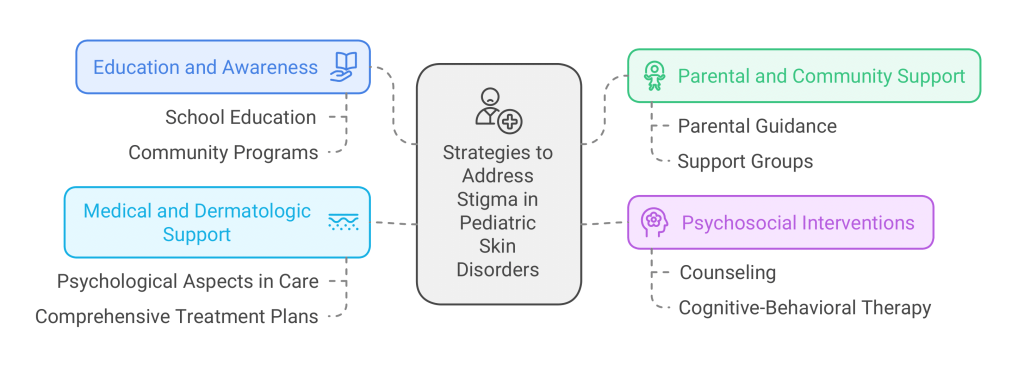
The findings from this study underscore the importance of addressing stigma in the treatment of pediatric skin disorders. Here are some strategies to help children cope with the emotional burden of their condition:
- Education and Awareness: Schools and communities can help reduce stigma by educating students about skin conditions. Helping children understand that skin disorders are medical conditions—not something “contagious” or “dirty”—can foster empathy and reduce bullying.
- Parental and Community Support: For parents, learning how to talk with their children about their condition and preparing them for social interactions can make a big difference. Community support groups can also provide safe spaces where children and families can share their experiences and learn from others facing similar challenges.
- Psychosocial Interventions: Counseling and therapy can be valuable for children experiencing stigma and bullying. Cognitive-behavioral therapy (CBT) can help children develop coping mechanisms for negative thoughts and improve their resilience against stigmatizing experiences.
- Medical and Dermatologic Support: Dermatologists and pediatricians should consider the psychological aspects of chronic skin conditions as part of their care. Treatment plans that address both the physical and emotional impacts can lead to better overall outcomes for young patients.
Conclusion: Breaking the Cycle of Stigma
The impact of chronic skin disorders goes far beyond physical symptoms. For many children, the experience of stigma, bullying, and social isolation can take a toll on their mental health and quality of life. By recognizing these challenges and addressing them directly, healthcare providers, parents, and educators can play a vital role in reducing the burden of stigma for these young patients. As we continue to learn more about the connections between visible health conditions and mental health, it’s clear that a holistic approach—one that acknowledges the mind-skin connection—is essential for supporting children with chronic skin conditions. By working together, we can help these children build confidence, resilience, and a brighter future.
 Zehn Skin and Health
Leave a comment